Mar 13, 2026
Employee Handbook Outline for Small Business
A simple, proven employee handbook outline for small businesses—what to include, what to skip, and a copy/paste structure you can customize fast.
Introduction
If you’re a small business owner, you don’t need a 75-page corporate handbook to be compliant and professional. You need a clear structure that covers the essentials, sets expectations, and protects your business—without overcomplicating it.
Below is a simple, practical employee handbook outline you can copy/paste and customize.
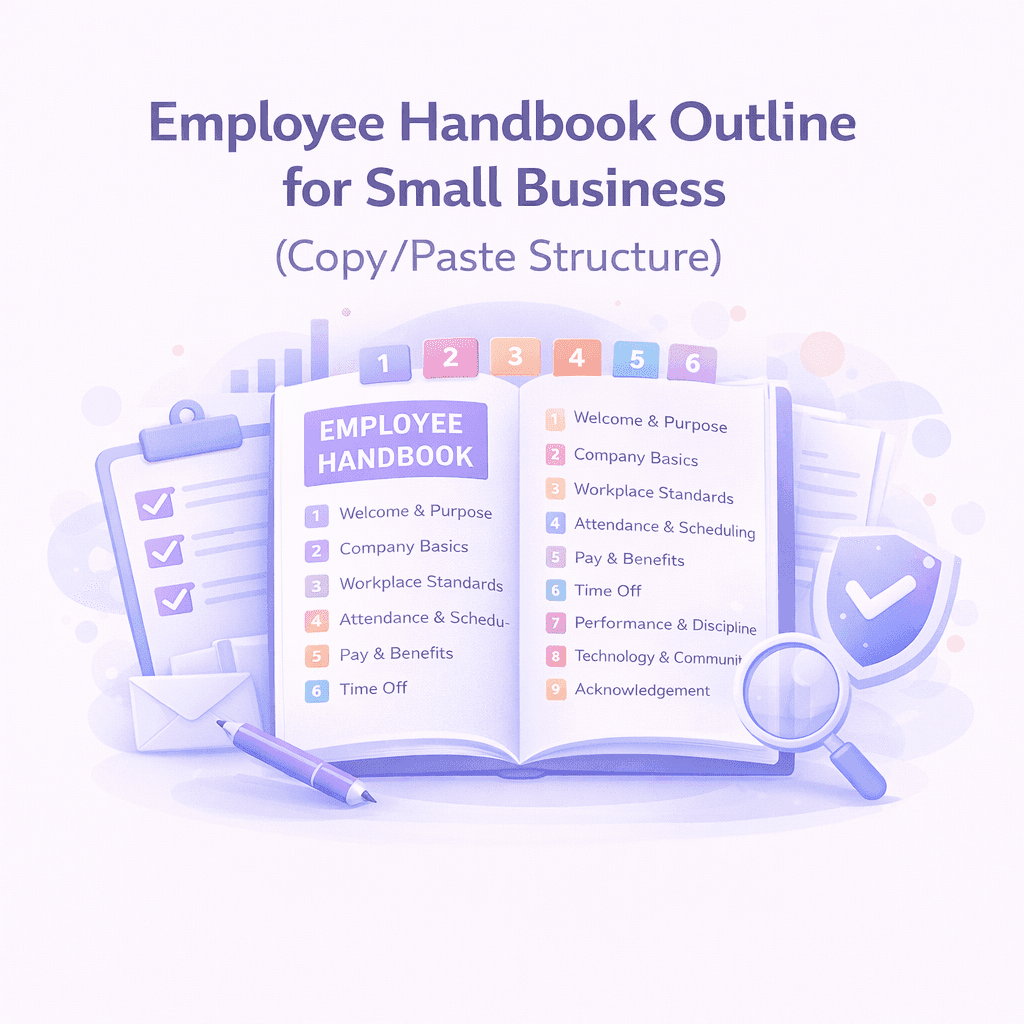
The Simple Employee Handbook Outline (Copy/Paste)
Use this as your master structure:
1) Welcome + Purpose
Welcome message
Who this handbook is for
Why it exists (expectations + consistency + compliance)
“This handbook is not a contract” statement
2) Company Basics
Mission / values (keep it short)
Employment classifications (full-time, part-time, temporary, exempt/non-exempt if applicable)
At-will employment statement (if applicable in your state)
3) Workplace Standards
Professional conduct
Anti-harassment and anti-discrimination
Workplace safety
Drugs/alcohol (if you have it)
Confidentiality + data protection (basic rules)
4) Attendance + Scheduling
Hours of work
Timekeeping (especially for hourly employees)
Attendance expectations
Tardiness and no-call/no-show
Remote/hybrid expectations (if applicable)
5) Pay + Benefits Overview
Pay schedules
Overtime basics (for hourly roles)
Benefits summary (high-level only; point to plan docs for details)
6) Time Off + Leave
PTO / sick time basics
Holidays
Leave policies (keep it compliant with your state; don’t guess)
7) Performance + Discipline
Performance reviews
Coaching and corrective action
Grounds for termination (keep it general)
8) Technology + Communication
Acceptable use of devices/internet
Email/Slack/communication expectations
Social media guidance (simple)
9) Acknowledgement Page
“I have received and understand the handbook”
Signature + date
What to Skip (Common Mistake)
Don’t try to write a policy for every possible scenario on day one.
Avoid:
Super detailed benefit language (it changes and can conflict with plan documents)
Legal-sounding paragraphs you copied from the internet
Policies that don’t match how you actually run the business
A handbook should reflect real operations. If you can’t enforce it, don’t include it.
The “Small Business” Shortcut: 10 Policies That Matter Most
If you only do a lightweight version, prioritize these:
Anti-harassment / anti-discrimination
Attendance + timekeeping
PTO / sick time basics
Overtime + breaks (if you have hourly employees)
Safety expectations
Confidentiality
Technology acceptable use
Remote work expectations (if applicable)
Performance + discipline
Acknowledgement signature