Mar 2, 2026
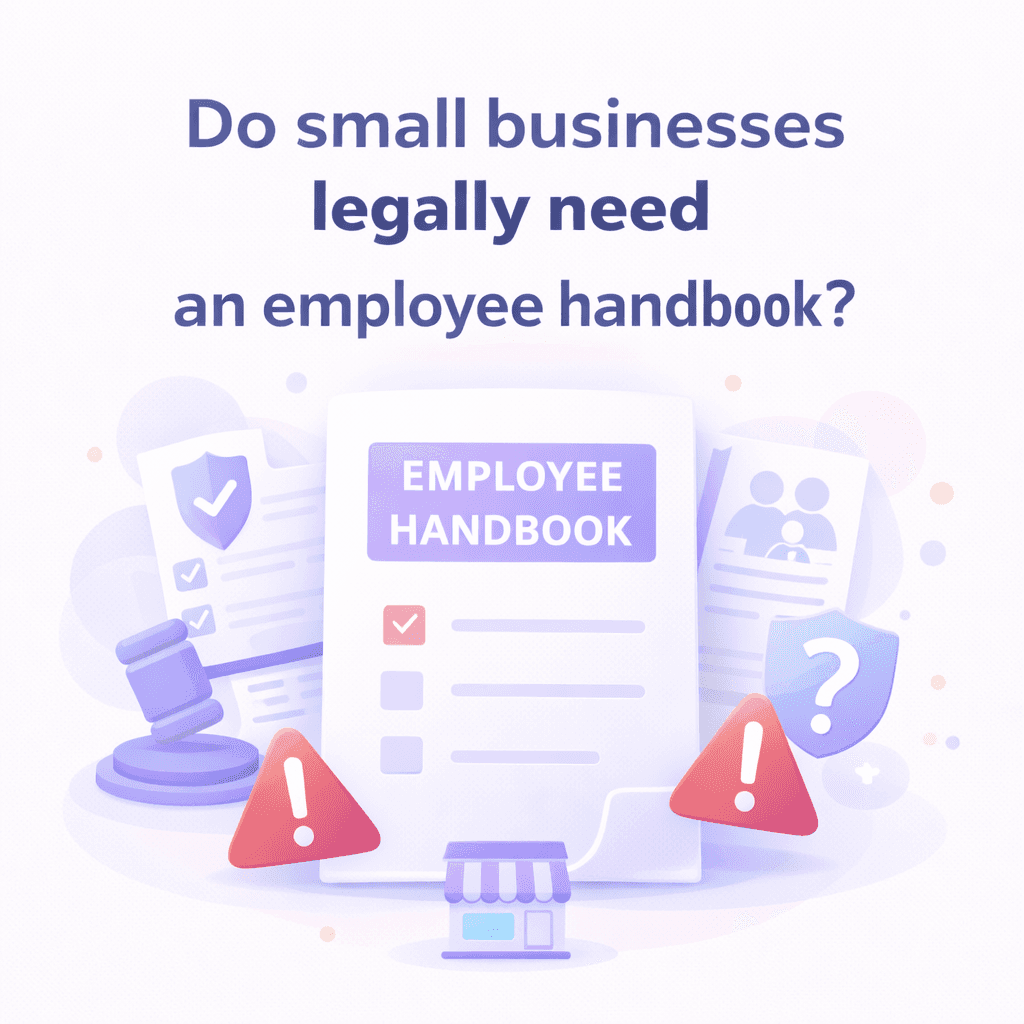
Do Small Businesses Legally Need an Employee Handbook?
Do small businesses legally need an employee handbook? Learn when a handbook is required, when it isn’t, and why even small teams benefit from having one.
Introduction
Many small business owners ask:
“Do I legally need an employee handbook?”
The honest answer is:
In most cases, no — you are not explicitly required by federal law to have a formal employee handbook.
But that doesn’t mean you shouldn’t have one.
In reality, even very small businesses benefit significantly from having a structured handbook — and in certain states, specific written policies are effectively required.
Let’s break this down clearly.
Is an Employee Handbook Required by Federal Law?
There is no single federal law that says:
“All employers must have an employee handbook.”
However, federal laws do require employers to communicate certain policies, including:
Anti-discrimination policies
Harassment policies
Family and medical leave rights (if applicable)
Workplace safety standards
While these laws don’t explicitly mandate a handbook, the easiest way to document compliance is through one.
State Laws Complicate the Answer
Many states require specific written policies to be distributed to employees.
Examples include:
Required anti-harassment policy language
Paid sick leave disclosures
Family leave notices
Domestic violence leave rights
Pregnancy accommodation policies
In some states, failure to provide written policies can create legal exposure.
So while “handbook” may not be mandated by name, written documentation often is.
What Happens If You Don’t Have One?
Small businesses without handbooks often run into:
1. Inconsistent Discipline
Different managers handle issues differently.
2. Confusion About Leave
Employees may misunderstand PTO or sick leave eligibility.
3. Disputes Over Expectations
Remote work, attendance, and conduct standards become unclear.
4. Increased Legal Risk
Without documented policies, defending workplace decisions becomes harder.
A handbook protects both employer and employee by clarifying expectations.
At What Size Should You Definitely Have One?
While there’s no legal “magic number,” most businesses should strongly consider a handbook once they:
Hire their first non-founder employee
Reach 5–10 employees
Operate in states with detailed leave laws
Begin offering PTO or structured benefits
The larger your team grows, the more important documentation becomes.
Does a Very Small Business (1–3 Employees) Need One?
Even micro-businesses benefit from:
At-will employment clarification
Basic conduct policies
Payroll expectations
Harassment reporting procedures
The smaller the team, the easier it is to implement early — before problems arise.
Why Many Small Businesses Delay
Common reasons owners postpone:
“We’re too small.”
“We trust everyone.”
“We’ll deal with it later.”
Unfortunately, workplace disputes don’t wait until a company feels “ready.”
Being proactive reduces stress later.
Is It Better to Have No Handbook Than a Bad One?
Yes — a poorly written handbook can be risky.
Common problems include:
Outdated legal language
Policies that contradict actual practice
Missing required state disclosures
Overly vague enforcement procedures
If you create one, it should be structured and tailored to your state and company size.
Final Answer
Are small businesses legally required to have an employee handbook?
Not always by name — but written policies are often required, and having a handbook dramatically reduces risk.
For most small businesses, the question isn’t:
“Do I legally need one?”
It’s:
“Do I want to protect my company and reduce avoidable risk?”
A properly structured handbook provides clarity, professionalism, and protection as your team grows.
If you want to generate a compliant employee handbook tailored to your state and business size, you can create one in minutes using DraftHandbook.