Feb 23, 2026
When Should a Startup Create an Employee Handbook?
Learn the ideal time for startups to create an employee handbook, why waiting can increase risk, and how early documentation protects growing companies.

Introduction
Many startup founders delay creating an employee handbook because they assume it’s something “bigger companies” need. In reality, the earlier a startup documents its workplace policies, the smoother its growth becomes.
So when should a startup create an employee handbook?
The short answer: earlier than most founders think.
This guide explains the right timing, the risks of waiting, and how early documentation supports healthy growth.
The Ideal Time: Before or Shortly After Your First Hires
A startup should strongly consider creating an employee handbook once it:
Hires its first full-time employee
Begins offering PTO or benefits
Expands beyond the founding team
Operates in a state with specific employment requirements
Once you move beyond founder-only operations, workplace expectations need structure.
Why Startups Often Wait Too Long
Many founders postpone handbook creation because:
“We only have 3–5 employees.”
“We’ll formalize policies later.”
“We trust everyone.”
“We’ll deal with HR issues when they come up.”
But informal systems work only in the earliest stage. As soon as growth begins, informal rules create inconsistency.
Risks of Waiting to Create a Handbook
1. Inconsistent Policy Enforcement
Without written rules, managers may treat similar situations differently. This increases legal exposure.
2. Confusion Around Benefits and Leave
As soon as PTO, remote work, or flexible schedules are introduced, written policies prevent misunderstandings.
3. Compliance Gaps
Startups operating in certain states may need specific anti-harassment, leave, or accommodation policies.
4. Difficult Scaling
When you hire quickly without documentation, onboarding becomes inconsistent and time-consuming.
The Growth Trigger: 5–10 Employees
For most startups, the “must-have” threshold happens around:
5–10 employees
At this point:
Multiple managers may be involved
Policies start evolving
Workplace disputes become more likely
Legal exposure increases
Creating a handbook at this stage stabilizes operations before rapid growth.
Remote and Hybrid Startups Need One Even Sooner
If your startup operates remotely or hybrid, written policies are even more important. You’ll need clarity around:
Remote work expectations
Equipment use
Time tracking
Communication standards
Data security
Remote teams without written expectations often experience confusion faster than in-office teams.
What a Startup Handbook Should Focus On
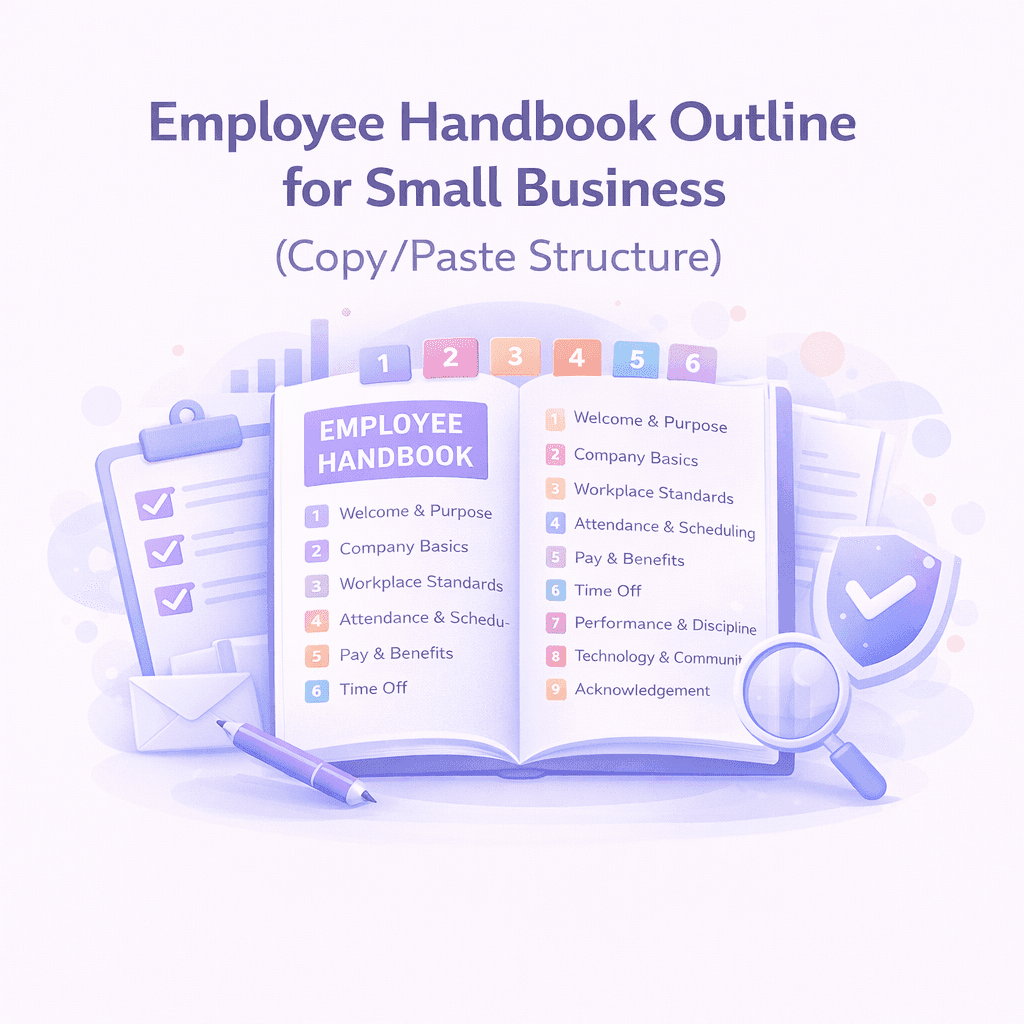
Early-stage startup handbooks don’t need to be complex. Focus on:
Core workplace conduct
Compensation and payroll basics
Leave policies
Anti-harassment policy
Technology use
Safety and compliance policies
Acknowledgment form
Keep it simple and scalable.
Can You Add Policies Later?
Yes. A handbook is a living document. As your startup grows, you can:
Add more detailed HR policies
Expand benefits sections
Update compliance language
Introduce performance review frameworks
Starting early prevents scrambling later.
Final Thoughts
The best time for a startup to create an employee handbook is before growth becomes chaotic.
Documenting policies early:
Reduces risk
Supports smoother hiring
Prevents inconsistent decisions
Signals professionalism
Waiting until problems arise often makes the process more stressful and expensive.
If you want to create a startup-ready handbook customized to your company size and state requirements, you can generate one in minutes using DraftHandbook.