Feb 16, 2026
Employee Handbook Policies Every Small Business Should Include
A practical guide to the essential employee handbook policies every small business should include to stay compliant, reduce risk, and set clear workplace expectations.

Introduction
Many small businesses know they need an employee handbook — but the most common question is:
“What policies should actually be included?”
A well-written handbook is not just a legal formality. It helps:
Set clear expectations
Protect your company from disputes
Maintain consistent workplace standards
Reduce HR confusion as your team grows
This guide outlines the core employee handbook policies every small business should include, even if you have only a few employees.
Why Clear Policies Matter
Without written policies, managers often make decisions differently in similar situations. This can lead to:
Inconsistent discipline
Legal exposure
Employee confusion
Workplace disputes
Clear handbook policies create a consistent framework that protects both the employer and employees.
1. Equal Employment Opportunity (EEO) Policy
Every handbook should begin with an Equal Employment Opportunity policy stating that your company does not discriminate based on protected characteristics such as race, gender, religion, disability, or age (as required by applicable laws).
This policy signals professionalism and demonstrates your commitment to fair employment practices.
2. Anti-Harassment and Workplace Conduct Policy
A workplace harassment policy should:
Prohibit harassment and discrimination
Provide reporting procedures
Outline investigation steps
Explain disciplinary consequences
Even small companies should have this clearly documented, as it significantly reduces legal risk.
3. Attendance and Punctuality Policy
Employees need clear expectations about:
Work hours
Tardiness
Absences
Call-in procedures
A written attendance policy ensures fairness and consistency when managing scheduling issues.
4. Compensation and Payroll Policies
While not every detail needs to be included, your handbook should explain:
Pay schedules
Overtime eligibility (if applicable)
Direct deposit procedures
Payroll corrections
This helps reduce payroll misunderstandings and administrative questions.
5. Time-Off and Leave Policies
Employees should understand how vacation, sick time, and other leave benefits work. Policies typically cover:
Vacation accrual (if offered)
Sick leave
Holidays
State-specific leave laws (where applicable)
Leave policies are one of the most frequently referenced sections of any handbook.
6. Workplace Safety Policy
A basic safety section should outline:
General safety expectations
Reporting procedures for incidents
Emergency procedures
Equipment or facility guidelines (if applicable)
Even office environments benefit from a simple safety framework.
7. Technology and Acceptable Use Policy
This policy defines expectations around:
Company device usage
Internet access
Data protection
Confidential information
As businesses rely more heavily on digital systems, this policy becomes increasingly important.
8. Disciplinary Process Policy
Employees should understand how workplace issues are handled. A standard disciplinary policy may include:
Verbal warnings
Written warnings
Final warnings
Termination procedures
This promotes transparency and reduces claims of inconsistent treatment.
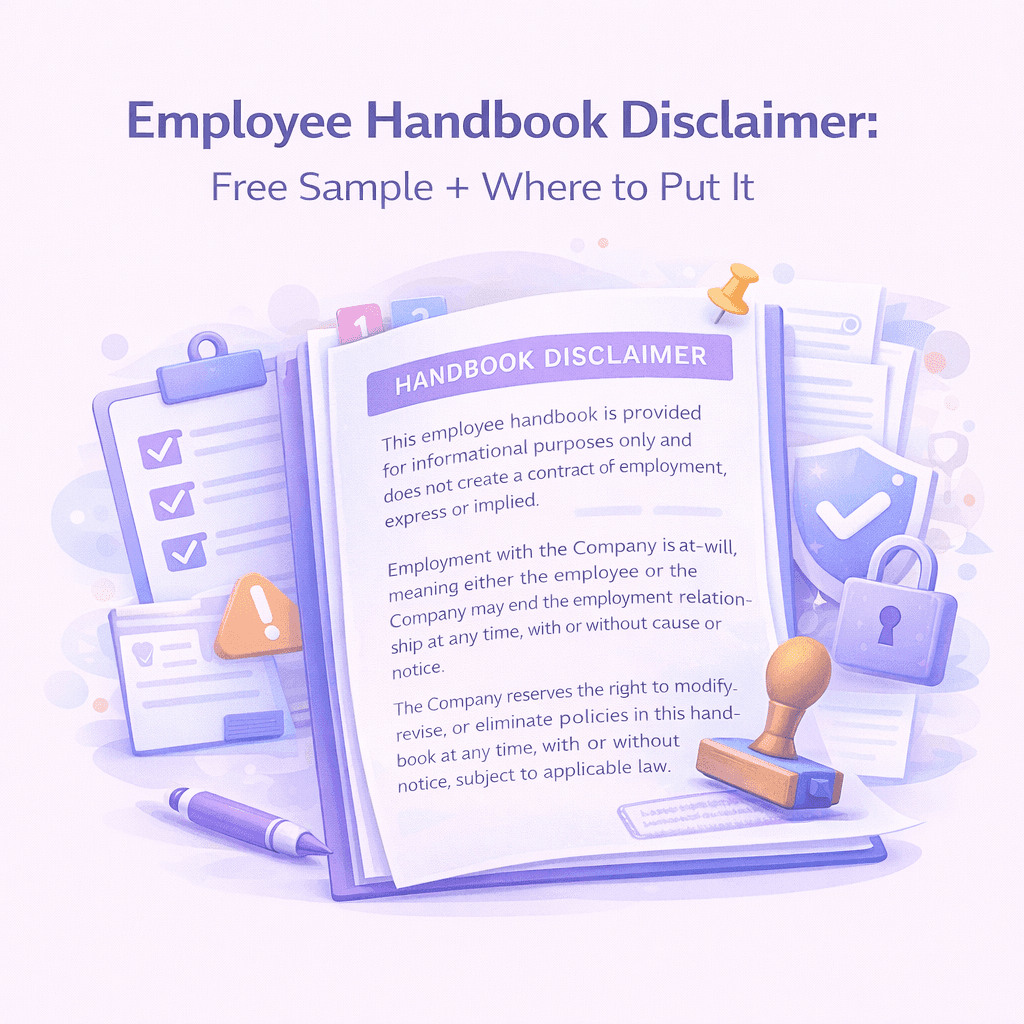
9. At-Will Employment Statement (where applicable)
Many employers include an at-will employment statement explaining that employment may be terminated by either party at any time, subject to applicable laws.
This helps clarify the nature of the employment relationship.
10. Employee Acknowledgment Form
Every handbook should conclude with an acknowledgment form confirming that employees:
Received the handbook
Understand the policies
Agree to follow workplace guidelines
This document is important for HR recordkeeping.
Final Thoughts
A small business employee handbook does not need to be complex — but it must include the core workplace policies that define expectations and reduce operational risk.
As your company grows, these policies become even more important for maintaining consistency across teams and managers.
If you want a faster way to create a professionally structured handbook customized to your company and state requirements, you can generate one in minutes using the DraftHandbook platform.