Feb 20, 2026
What Policies Must Be Included in an Employee Handbook?
A clear breakdown of the essential policies that must be included in an employee handbook to reduce risk, meet compliance expectations, and protect your business.

Introduction
If you're creating an employee handbook, one of the most important questions is:
What policies are legally required — and which ones are simply recommended?
While requirements vary by state and company size, there are core policies that every small business should include to reduce legal exposure and maintain consistent workplace standards.
This guide outlines the essential policies that must be included in an employee handbook and explains why they matter.
1. Equal Employment Opportunity (EEO) Policy
An Equal Employment Opportunity policy states that your company does not discriminate based on protected characteristics such as:
Race
Color
Religion
Sex
National origin
Age
Disability
Other protected classifications under applicable laws
This policy establishes a foundation of fair employment practices and is considered standard in virtually all professional workplaces.
2. Anti-Harassment Policy
Most states require employers to clearly communicate workplace harassment policies. A compliant anti-harassment section should include:
A definition of prohibited conduct
Reporting procedures
Investigation procedures
Protection against retaliation
This policy is one of the most important risk-reduction tools in your entire handbook.
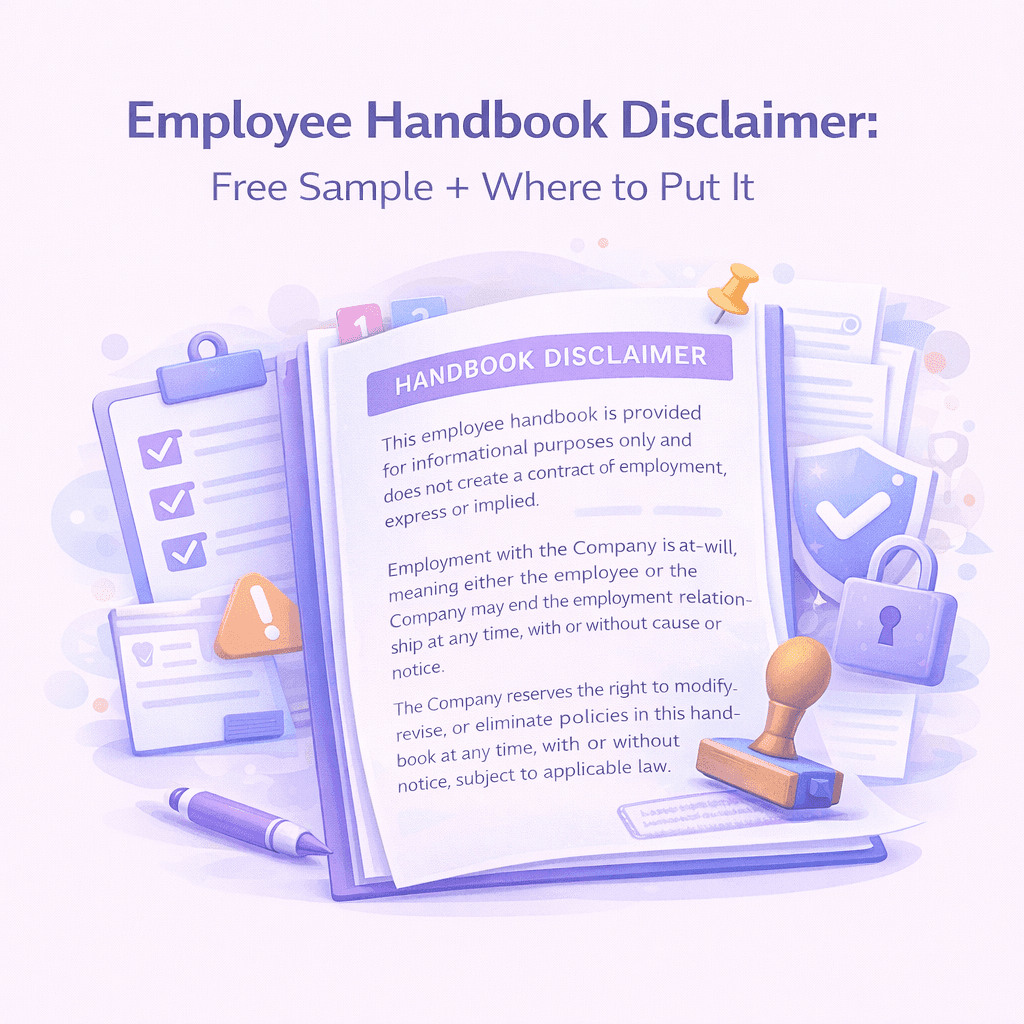
3. At-Will Employment Statement (Where Applicable)
In many states, employment is considered “at-will,” meaning either party may terminate the employment relationship at any time, subject to applicable laws.
Including an at-will statement clarifies the nature of employment and helps prevent misunderstandings about job security.
4. Attendance and Work Hours Policy
Your handbook should define:
Work schedules
Tardiness expectations
Absence procedures
Overtime rules (if applicable)
This ensures consistency in how attendance issues are handled.
5. Wage and Payroll Policies
While not all payroll details need to be included, your handbook should outline:
Pay schedule
Overtime eligibility
Direct deposit procedures
Payroll dispute processes
Clear payroll policies reduce administrative confusion and employee questions.
6. Leave Policies
Depending on your state, certain leave policies may be legally required. Common examples include:
Sick leave
Family and medical leave
Jury duty leave
Military leave
Even when not legally mandated, documenting leave policies improves transparency.
7. Workplace Safety Policy
Employers are generally required to provide a safe work environment. Your handbook should include:
General safety expectations
Incident reporting procedures
Emergency protocols
This applies to office, remote, and physical workplaces alike.
8. Code of Conduct Policy
A code of conduct outlines acceptable workplace behavior, including:
Professional standards
Anti-discrimination practices
Substance policies
Confidentiality expectations
This policy creates a consistent workplace culture.
9. Technology and Acceptable Use Policy
As businesses increasingly rely on digital tools, a technology policy should address:
Internet usage
Email usage
Data security
Confidential information protection
This helps safeguard business information.
10. Employee Acknowledgment Form
Finally, your handbook must include an acknowledgment form confirming that employees:
Received the handbook
Understand the policies
Agree to follow workplace rules
Signed acknowledgments are critical documentation if disputes arise.
State-Specific Considerations
Certain states require additional policies, such as:
Paid family leave disclosures
Pregnancy accommodation policies
Domestic violence leave
Specific anti-harassment language
Because requirements vary by state, using state-aware handbook templates helps ensure compliance.
Final Thoughts
While not every policy is legally mandated in every state, including these core policies significantly reduces risk and strengthens workplace clarity.
A professionally structured employee handbook protects your business, supports compliance, and creates consistency as your team grows.
If you want a faster way to generate a handbook tailored to your company size and state requirements, you can create one in minutes using DraftHandbook.