Jan 26, 2026
Employee Handbook Basics: What Small Businesses Actually Need (And What They Don’t)
Confused about what belongs in an employee handbook? This guide breaks down the essential sections every small business needs—and the common extras you can safely skip.

Introduction
Creating an employee handbook can feel overwhelming—especially for small businesses without a dedicated HR team. Many owners either overbuild a 60-page document no one reads or avoid writing one entirely out of fear of “getting it wrong.”
The truth is simpler: a good employee handbook doesn’t need to cover everything. It just needs to cover the right things.
This guide walks through what actually belongs in a small-business employee handbook—and what you can safely leave out.
Why an Employee Handbook Matters (Even for Small Teams)
An employee handbook isn’t just paperwork. It sets expectations, reduces confusion, and protects both the employer and employees.
A clear handbook helps you:
Communicate policies consistently
Reduce day-to-day questions and misunderstandings
Show professionalism and credibility
Limit legal risk by documenting expectations
Even businesses with 5–10 employees benefit from having policies written down.
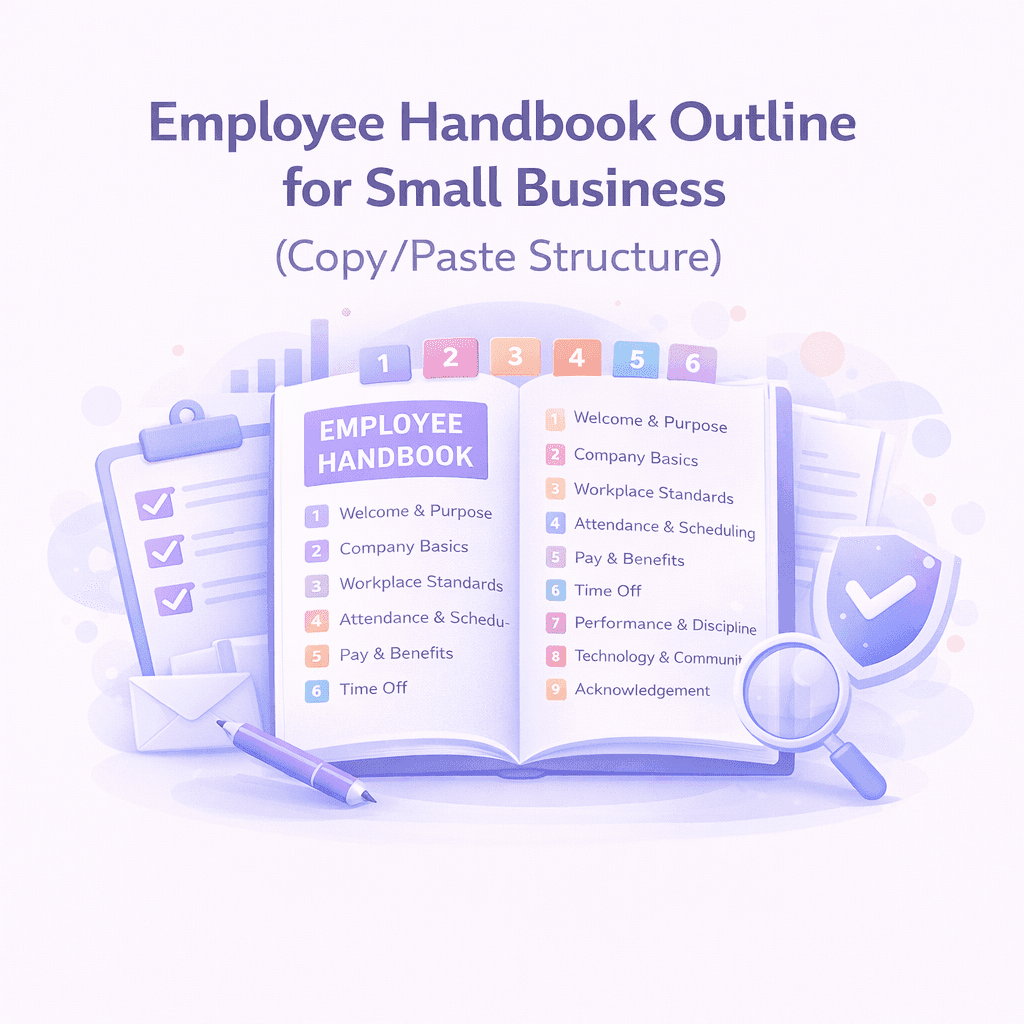
The Core Sections Every Small Business Handbook Needs
You don’t need dozens of policies. Start with these essentials:
1. Company Overview
Briefly explain who you are, what you do, and your values. This gives context and sets tone.
2. Employment Basics
Include:
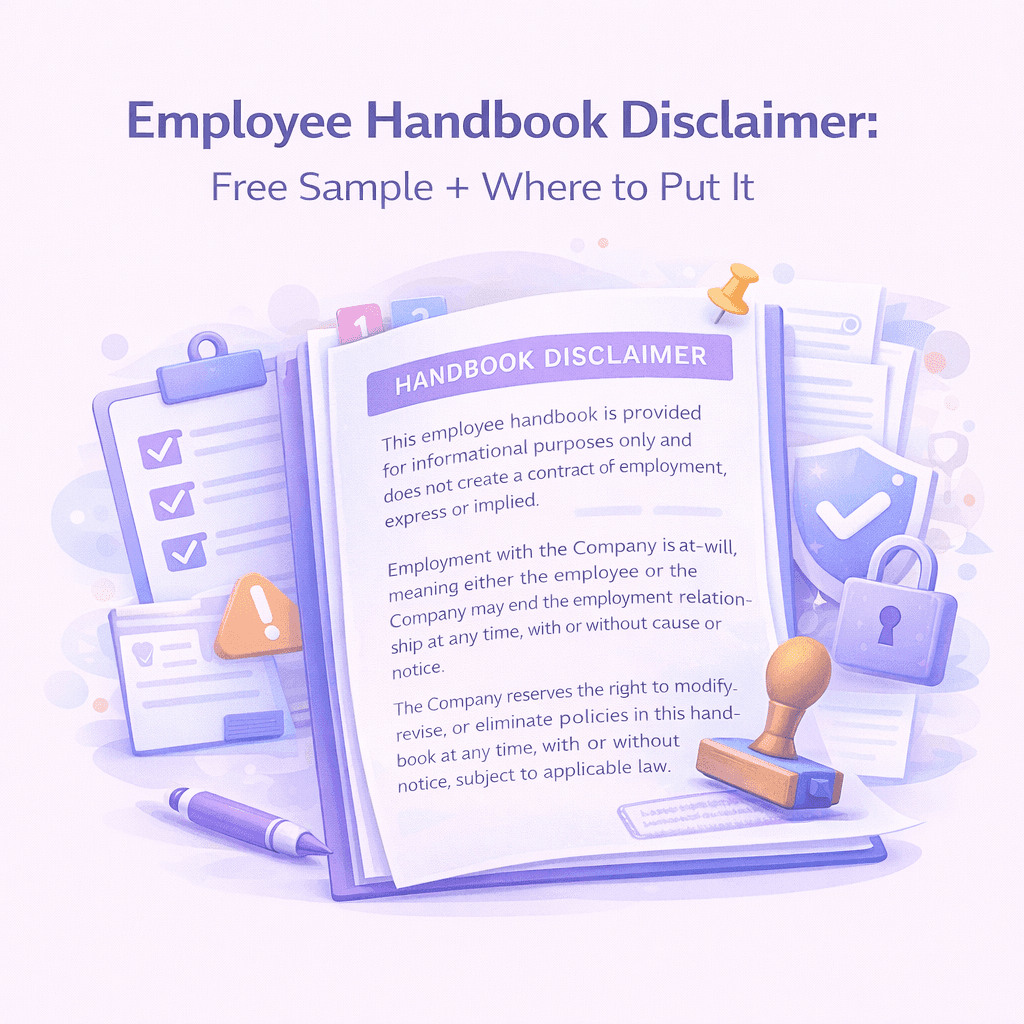
At-will employment statement
Equal employment opportunity (EEO) policy
Anti-harassment and discrimination policies
These are foundational and often legally expected.
3. Work Hours & Pay
Cover:
Work schedules
Overtime rules
Timekeeping expectations
Pay frequency
Clarity here prevents disputes later.
4. Time Off Policies
Outline:
Paid time off (if offered)
Sick leave
Holidays
State-required leave (varies by location)
This is one of the most referenced sections in any handbook.
5. Workplace Conduct
Set expectations around:
Professional behavior
Attendance
Use of company equipment
Confidentiality
Clear standards reduce gray areas.
What You Can Usually Skip (At Least for Now)
Many small businesses overcomplicate their handbook by copying enterprise-level policies they don’t need yet.
You can often skip or delay:
Highly detailed disciplinary matrices
Complex performance review systems
Extensive remote-work frameworks (unless fully remote)
Long benefits explanations (a summary is enough)
A handbook should support your business—not bury it in unnecessary complexity.
State-Specific Rules Matter More Than You Think
One of the biggest mistakes small businesses make is using a generic handbook without considering state laws.
Requirements for:
Sick leave
Paid family leave
Meal and rest breaks
Termination notices
can vary significantly by state. A handbook that works in one state may be incomplete—or risky—in another.
Keeping Your Handbook Simple and Up to Date
Your first handbook doesn’t need to be perfect. It just needs to be accurate, clear, and compliant.
A good approach is to:
Start with essential policies
Customize based on your state
Update as your business grows
This keeps your handbook useful instead of intimidating.
Final Thoughts
A small business employee handbook isn’t about covering every scenario—it’s about setting clear expectations and protecting everyone involved.
If you focus on the essentials, avoid unnecessary complexity, and account for state-specific requirements, you’ll already be ahead of most businesses your size.