Jan 24, 2026
Employee Handbook Requirements by State (2026 Guide)
A plain-English guide to employee handbook requirements by state, including what to include, what’s required, and common compliance mistakes.
Introduction
Employee handbooks are one of the most commonly overlooked compliance documents for small businesses. While there is no single “federal employee handbook law,” many states do require specific policies to be included — and missing them can create legal risk.
This guide breaks down:
What an employee handbook is
What policies are commonly required
How requirements vary by state
How to avoid common mistakes
What Is an Employee Handbook?
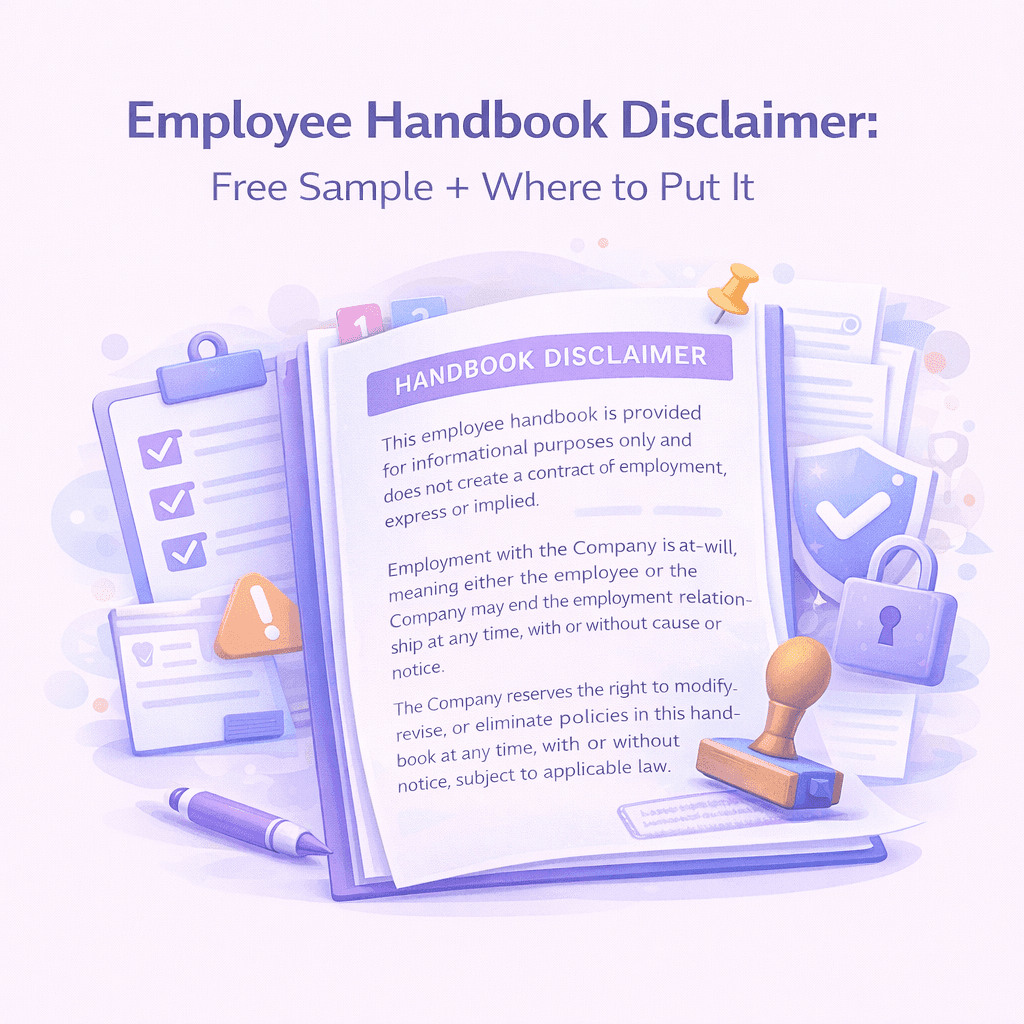
An employee handbook is a written document that outlines workplace policies, expectations, and legal disclosures. It serves as both:
A reference guide for employees
A layer of legal protection for employers
Handbooks typically cover topics like:
At-will employment
Anti-discrimination policies
Leave policies
Wage and hour rules
Workplace conduct
Are Employee Handbooks Required by Law?
No federal law requires a handbook.
However, many states require specific written policies to be provided to employees — and the handbook is the most common way to do this.
Examples include:
Anti-harassment policies
Paid sick leave disclosures
Family leave notices
Meal and rest break policies
State-Specific Employee Handbook Requirements
This is where most businesses get tripped up.
Some examples:
California: Harassment prevention, paid sick leave, family leave, meal/rest breaks
New York: Sexual harassment prevention policy and training acknowledgment
Illinois: Paid leave disclosures, equal pay statements
Colorado: Paid family and medical leave notices
Requirements change frequently, which is why static templates often become outdated.
Common Employee Handbook Mistakes
Small businesses often:
Copy a generic template
Include policies that don’t apply
Miss required state disclosures
Forget to update the handbook annually
These mistakes can create exposure during disputes or audits.
How to Create a Compliant Handbook (Without a Lawyer)
There are three options:
Hire an employment attorney (expensive)
Use a generic template (risky)
Use a state-aware handbook generator
A state-specific approach ensures your handbook reflects current laws without unnecessary complexity.
Call to Action
If you want a simple, state-aware employee handbook without legal headaches:
Generate your employee handbook →