Feb 4, 2026
Do You Legally Need an Employee Handbook? (Small Business Guide)
A clear, no-nonsense guide to whether employee handbooks are legally required, what they must include, and how small businesses stay compliant.
Introduction
If you run a small business, you’ve probably asked:
“Do I actually need an employee handbook… or is that just for big companies?”
The answer is not always simple — but getting it wrong can cost you thousands in fines, lawsuits, or compliance violations.
This guide breaks down:
What the law really requires
When a handbook is mandatory
And what small businesses should do to stay protected
No legal jargon. Just straight answers.
Is an Employee Handbook Legally Required?
In most U.S. states, a handbook itself is not legally required.
However…
Many of the policies that belong inside a handbook are legally required.
That means even if you don’t call it a “handbook,” you are still required to give employees written information about:
Anti-harassment policies
Family and medical leave rights
Wage and hour laws
Workers’ compensation
State-specific labor protections
A handbook is simply the official way to deliver all of these in one compliant package.
When a Handbook Becomes Mandatory
Some states and situations do require written policies.
For example:
California
Employers must provide written:
Sexual harassment prevention policies
Paid sick leave policies
Pregnancy disability leave policies
New York
Employers must give written:
Sexual harassment policies
Anti-discrimination notices
Federal Requirements
If you have 50+ employees, you must provide written FMLA notices.
All employers must provide OSHA and wage-law disclosures.
Once you combine all of these, you effectively must have a handbook to remain compliant.
What Happens If You Don’t Have One?
Without a proper handbook, you face:
Fines from labor departments
Lost lawsuits (even if you did nothing wrong)
Employee disputes you can’t defend
Higher legal fees
Courts often assume:
“If it wasn’t written, it didn’t exist.”
A handbook protects you just as much as it informs employees.
What a Legally Compliant Handbook Includes
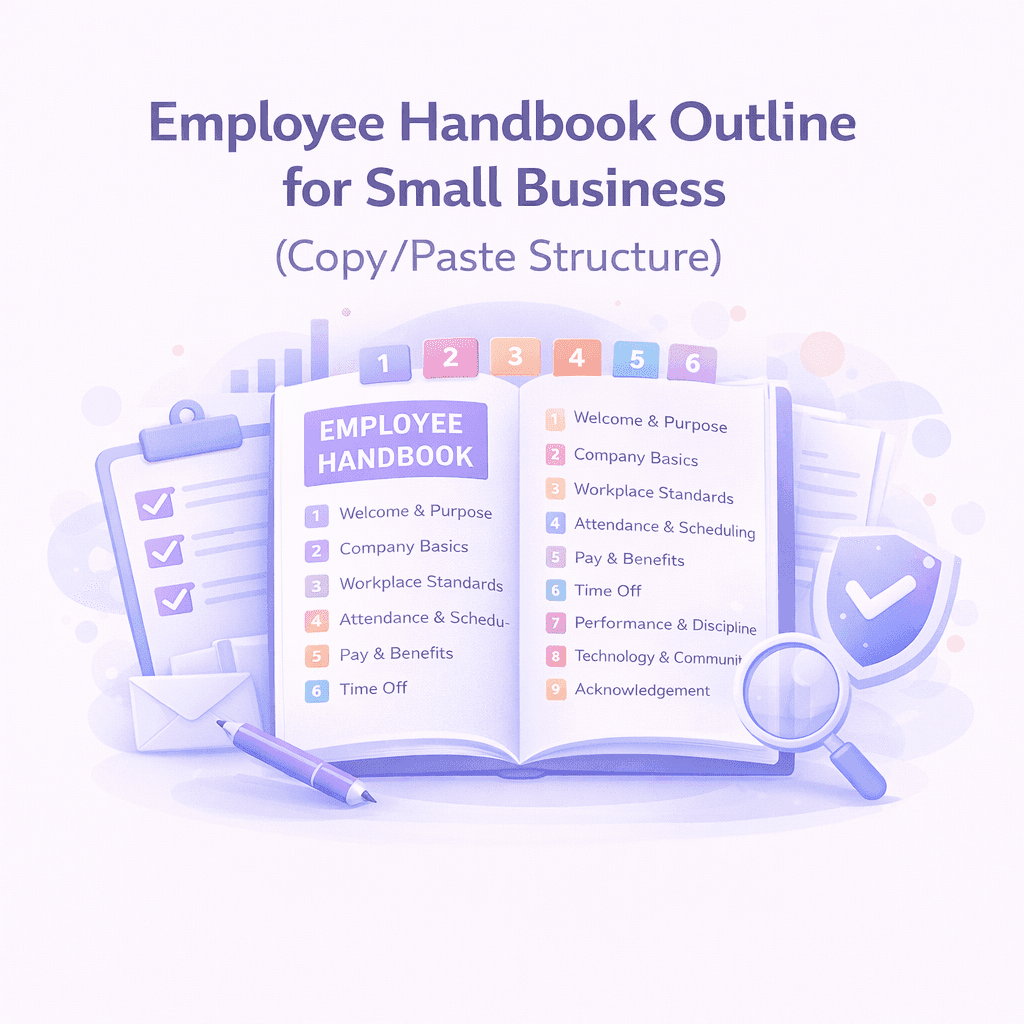
A compliant small-business handbook should contain:
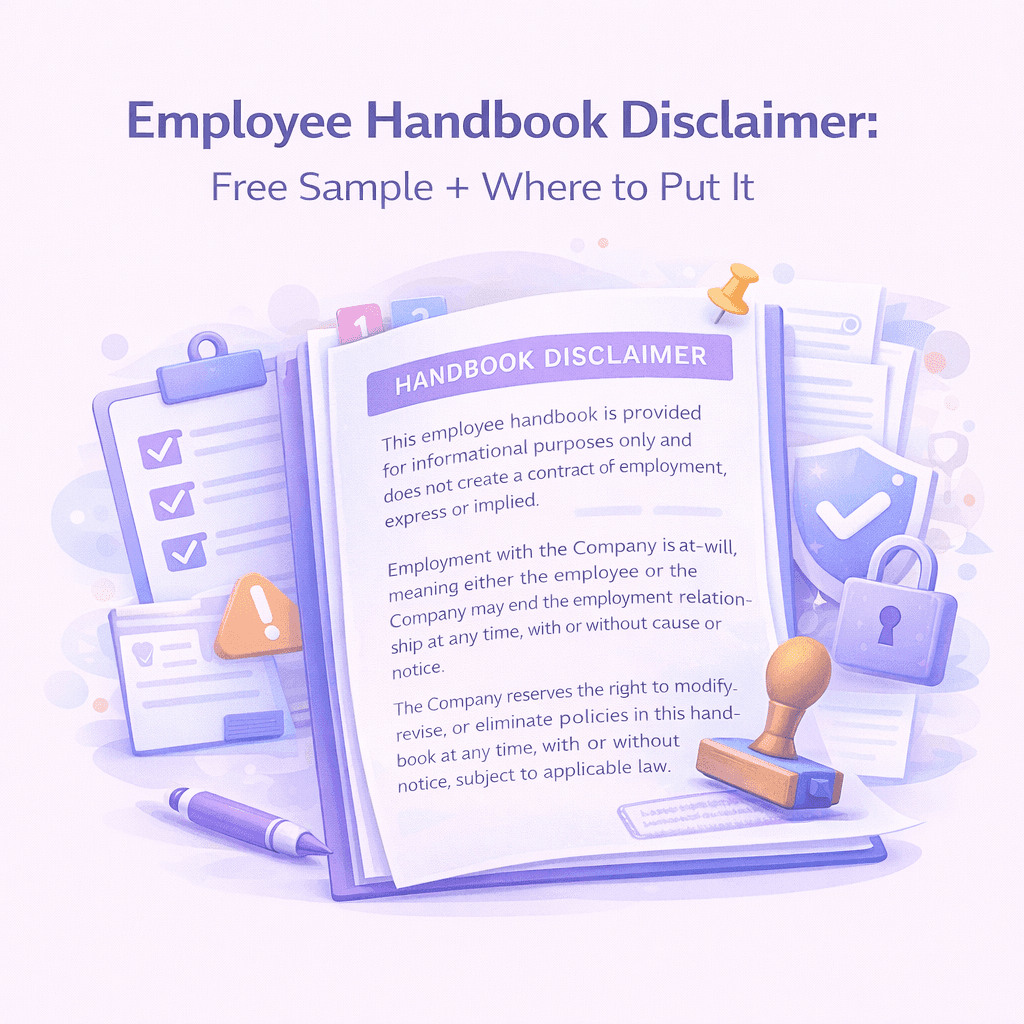
At-will employment statement
Anti-discrimination & harassment policy
Wage & overtime policies
Paid time off & sick leave
Family and medical leave
State-specific labor laws
Safety and workplace rules
These vary by state — which is why templates downloaded online often fail.
Can You Use a Free Template?
You can… but it’s risky.
Most free templates:
Are outdated
Ignore state laws
Miss required disclosures
This is why small businesses get sued even when they tried to do things right.
The Safe, Simple Way to Stay Compliant
The easiest way to stay compliant is to use a system that:
Knows your state
Updates automatically
Generates a legally structured handbook
Gives you DOCX + PDF files
That’s exactly what DraftHandbook does.
Instead of guessing or copying something off Google, you get:
A tailored handbook
Built for your business
Delivered within 24 hours
Final Thought
You may not be legally required to call it a handbook…
…but you are absolutely required to provide the policies inside it.
The smart move is to do it once, do it correctly, and protect your business.